

It’s a new year and a new you. You would like to start karting this year and want to know how to start. You have identified Worr as the best team for you and you’ve done your training. You are now going to your first race (read your first race). Now that the briefing session is done you have sprinted back to your pits and have your helmet on ready to race… You already envision yourself approaching the tram lines at full acceleration to set a track lap record to the cheers of your coach and all admirers. But as you get onto track you see the stewards with weird flags in hand and as you stare and wonder “Why is he holding a red flag?” you suddenly notice a crash ahead of you. It is important to remember what each flag means.
We all know to race until the checkered flag… But karting has a few flags that have specific meaning and significance. You must know the difference of each to respond appropriately during a race because ignoring or misinterpreting a flag can lead to a dangerous situation on track.
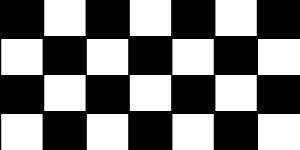
The Checkered flag
The checkered flag is to signal the end of a race or practice session. When the checkered flag is displayed, drivers should complete the current lap and then proceed to the pit lane.

The Yellow flag
The Yellow flag is the caution flag. It’s used to indicate a hazard on track. When the yellow flag is waved, drivers must slow down and maintain position. Overtaking is not allowed under the yellow flag and if it does happen a penalty may be issued.

The Red Flag
The red flag is used to signal that the race or practice session has been stopped. When the red flag is displayed, drivers must come to a complete stop as quickly and safely as possible. This is generally used when a major accident or track blockage has occurred to bring the drivers to a halt so track officials can attend the scene.

The Green Flag
The green flag is used to signal the start of a race or the resumption of racing after a caution period. When the green flag is displayed, drivers can accelerate and resume normal racing speed. It is important to note that while most circuits will use a green light for the start of a race, in some instances a green flag is shown.
You will only spot the green flag at the start/finish line of a circuit.

The blue flag
The blue flag is to show you that a faster driver is coming to lap you, and you should let that driver pass safely. When you are behind a lot of traffic or are left behind by many of the group in front of you, it is likely that a few laps later the front runner would catch up to you in a circuit. When this happens, the stewards will wave a blue flag, and you should let the faster driver pass safely by either not defending or moving off the racing line.

The dreaded black flag
The black flag is used to signal a penalty or a mechanical issue with a driver’s kart. When the black flag is displayed, the driver must immediately report to the pit lane.
Now that you have a good understanding of the flags you should continuously memorise them because it is not just for your safety but the safety of everyone around you. Stay safe and enjoy yourself.